

The most curious aspect of the clash between Singapore and Jakarta is that it came after accusations from the Indonesian leadership that they would respond to neighbours "disrespecting" or "insulting" their country.
But Singapore never did.
In fact, in his remarks on Oct. 19, min. Shanmugam said that while the comments of the Indonesian official who said that Indonesia was "sending oxygen" when the forests weren't on fire were "disappointing", he praised cooperation with Prabowo.
"We appreciate that President Prabowo and his administration are focused on trying to solve the problem. [...] The president has personally expressed commitment to tackling that case [...] Some of these steps are quite unprecedented. They show what President Prabowo and his administration's approach and thinking are." – min. K. Shanmugam
Sharp criticism directed towards Indonesia actually came from Malaysia, whose MP, Syed Saddiq, called for it to be treated as an "outcast in the region".
So, why is Singapore being punished all of a sudden?
Indonesia has cut gas deliveries to the city-state, while its former trade minister unleashed a series of social media attacks, across multiple video posts, accusing Singapore of not pursuing the real culprits behind the fires (the big companies registered in the city), of conspiring with MSCI to downgrade Indonesia's stock market ratings and, in another post, of effectively robbing Indonesia of its wealth.
The only slap Malaysia received was when it was jointly named with Singapore in a recommendation by another Indonesian minister to pilgrims heading for Mecca, that they should avoid transiting in either of the two countries and help contribute to Indonesian air sector instead.
Singapore has not said anything offensive against Indonesia, other than expressing concerns about the fires and naming companies based there, which were identified as owners or operators of the tracts of land where fires are raging.
There's no reason to target it. Or is there?
The reality is that the haze crisis is just an excuse, a catalyst of the brewing conflict, which the new Indonesian administration has been preparing for ever since it took charge, at the end of 2024.
And the man you have to pay the closest attention to is Bahlil Lahadalia, Indonesian Minister of Energy and Mineral Resources. He's the one who announced the gas cuts and rebutted Singapore about the terms of bilateral contracts.
Here’s what happened
Let's retrace his statements and actions all the way back to 2024, when Prabowo was sworn in:
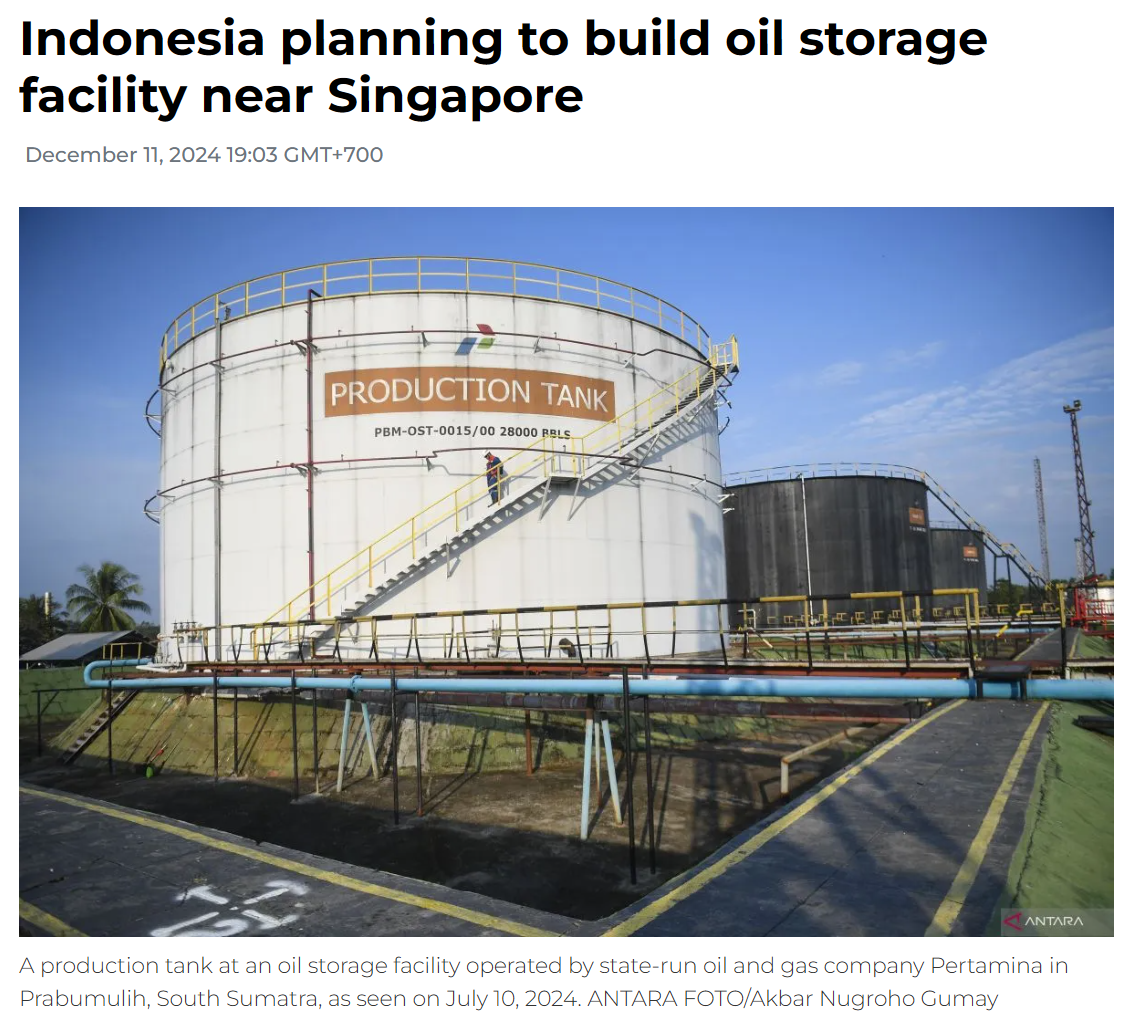
December 2024: Indonesia announces plans to build oil storage near Singapore. "Singapore does not have oil, but Indonesia imports 60 percent of its oil from the country. This is utterly mind-blowing to me." said min. Lahadalia.
January 2025: "We import 54 percent of our oil consumption from – guess where – Singapore. Our fuel supply is coming from a country that doesn't even produce oil," Bahlil said at the 2025 Beritasatu Economic Outlook seminar in Jakarta.
May 2025: Indonesia to halt refined fuel imports from Singapore. The government has announced a plan to replace oil imports from Singapore with direct shipments of the commodity from producers in the Middle East. “I immediately decided that, for the next six months, we are no longer allowed to import oil from Singapore. We will just import from the Middle East,” Energy and Mineral Resources Minister Bahlil Lahadalia said on Thursday at the Golkar Party’s headquarters in Palmerah, West Jakarta.
He said the move was aimed at “preserving national dignity and strategic sovereignty”, and criticized the fact that over half of all fuel imports into the country currently came from Singapore, despite the available supply from oil-producing nations in the Middle East.
May 2025: "It is almost certain that we will take other fuel imports from other countries, not from that one (Singapore)," he told reporters, adding the shift could happen in the next six months.
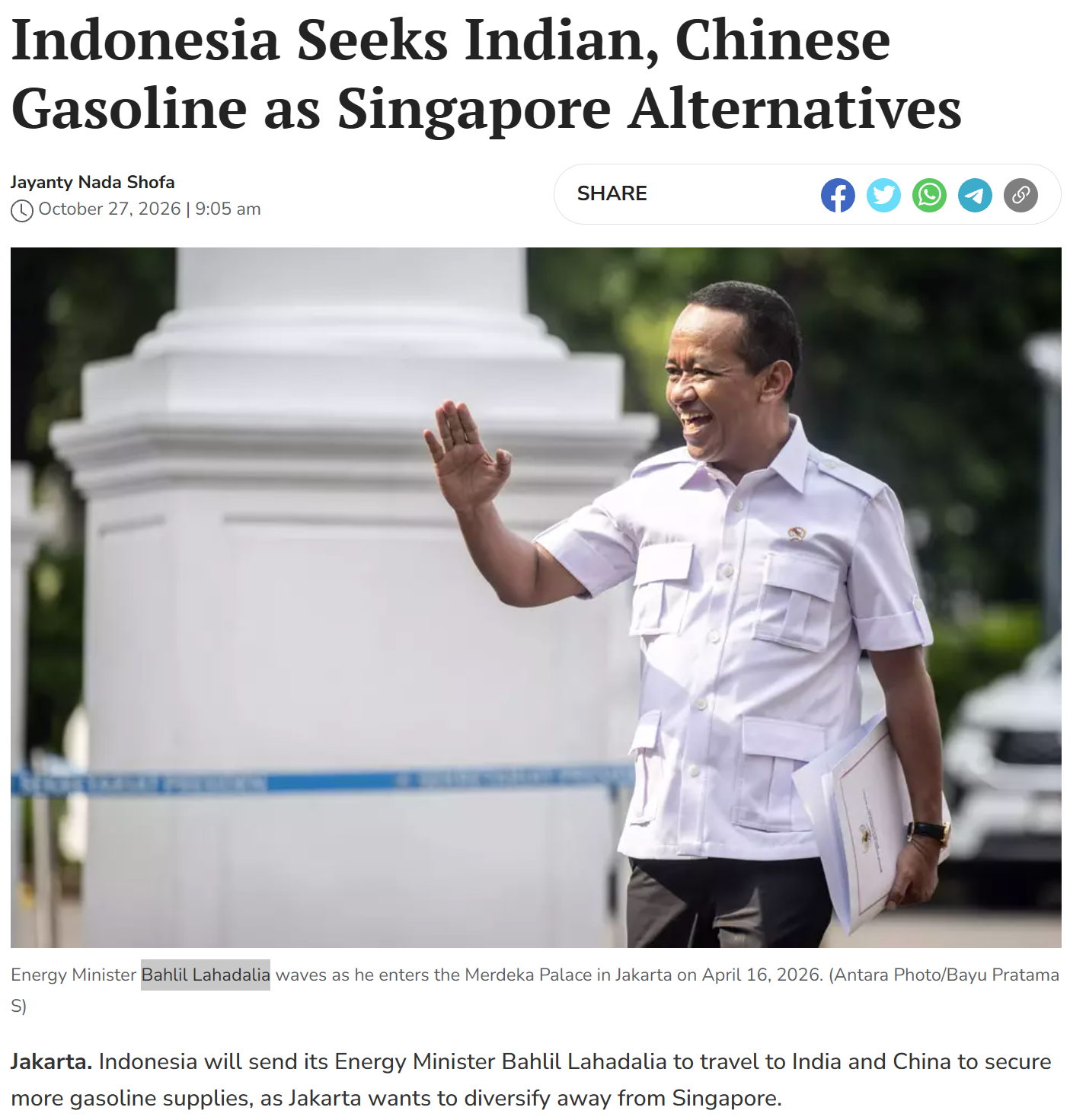
October 2026: And now, minister Lahadalia announces talks with Indian and Chinese refineries:
There's clearly a pattern of dismissive attitude towards Singapore – a "country with no oil" that Indonesia needs to diversify away from. Of course, those plans were brutally verified by the war with Iran, and the intended transition to Middle Eastern supplies never materialised.
But that's not everything.
Throughout 2025 and 2026, Indonesia singalled plans to cut gas exports and occasionally disrupted supplies of both LNG and piped gas, like in January 2025, April 2025 or August 2025, although in May 2026 it promised not to cut exports anymore.
As we can see it didn't honour its word.
The crucial pipeline
This is what I haven't seen in the news, despite it being a critical piece of the puzzle.
Almost exactly one year ago, in October 2025, Indonesia finally signed a construction contract for a critical branch of a gas pipeline coming from West Natuna directly into Singapore. The project had been delayed for a decade and was only revived by Prabowo administration, which quickly got to work on completing the short but important pipe.
Until now, gas from West Natuna was delivered solely to Singapore and could not be redirected to Indonesian consumers. The new connection changed that.
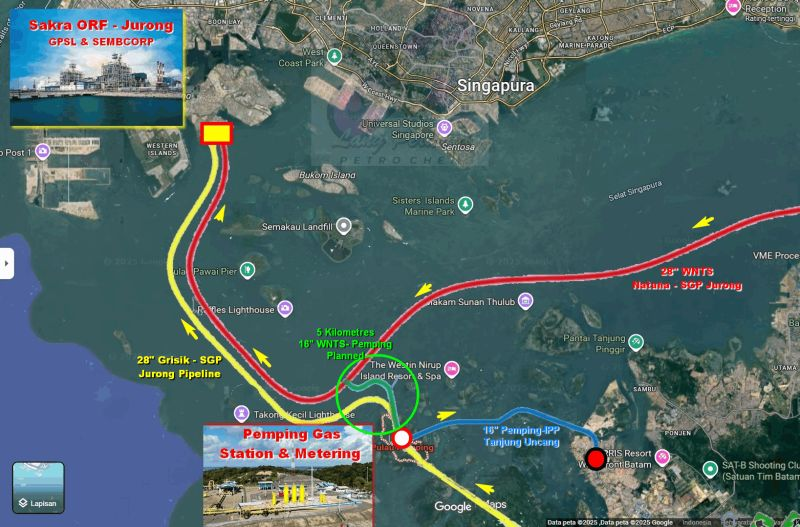
Completed within a year, it allows Indonesia to redirect gas from Singapore to Batam. Incidentally, it is one of the two pipelines that Jakarta cut supplies on Saturday.
It became operational only this month. Isn't that a little too convenient?
On October 5, Djoko Siswanto, chairman of SKK Migas, cheered the commissioning of the pipeline, saying: "God willing, this October, Natuna gas that has long wandered to Singapore will return to the embrace of the motherland."
Yes, that was just three weeks ago.
Can there be any doubt that the new Indonesian administration has embraced a more confrontational approach towards Singapore, explicitly saying it wants to stop buying oil from the city-state and stop suppling it with natural gas?
And now, just days after the critical pipeline was completed, it acted on its threats, desperately trying to link them to the haze situation, even though Singapore made no offensive comments about the country?
The exceptionally dire situation with air pollution coming from fires in Indonesia may have been a catalyst for this more aggressive stance.
Facing anger at home, political leaders in Jakarta decided to use Singapore as the scapegoat, alleging it is complicit in the fires by somehow protecting the real culprits behind them and for the longest time leeching on Indonesian wealth, that they claim was moved to the city-state.
It's a common tactic by incompetent politicians facing problems at home – distract the public with a foreign conflict instead, and try to rally the people around the common national cause, even if they are the ones responsible for the crisis.
But there is hardly any doubt that they have long planned to inflict pain on Singapore, by threatening to buy oil elsewhere and keep their gas at home.
What's worse, it's hard to expect this situation to blow over or change.
This may very well be the new status quo in bilateral relations with a nation of 300 million people which is clearly suffering deep insecurities about its inferiority to a tiny, safe, civilised and prosperous island, where Indonesians serve mostly as domestic helpers.


