

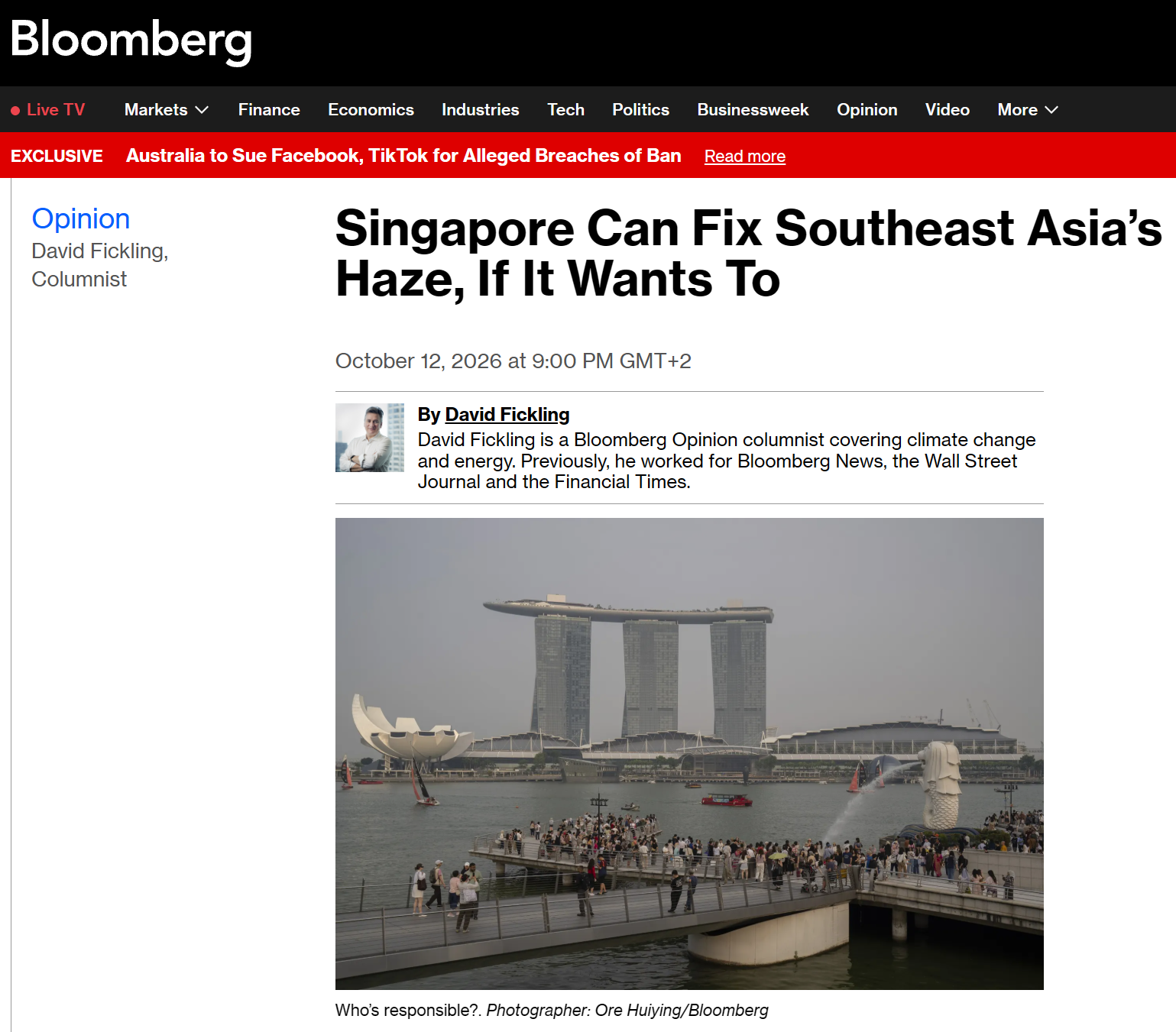
It seems it has become fashionable to blame Singapore for the haze crisis in Southeast Asia. After Bloomberg's another shameless hatchet job a few days ago, now a former trade minister, serving at Jokowi's cabinet between 2020 and 2022, challenged Singapore to go after the big conglomerates (some of which are registered in the city-state) and the people who run them.
Muhammad Lutfi, in a TikTok video he directed to Singaporeans, clearly with an intent to influence public opinion in the city, alleged that the city is an enabler of the crisis, by refusing to prosecute those who are "really" guilty.
Ironically, he posted his clip right around the time that min. Shanmugam was threatening to do just that – hold i.a. companies registered in Singapore responsible.
Nevertheless, Singapore is a nation of laws - an idea that may be foreign to someone coming from Indonesia, given how dysfunctional that country is.
What I mean by this, is that it is always extremely difficult to prosecute anybody without direct evidence of their crime. We're talking about a large number of quasi-independent businesses, feeding into larger companies processing pulpwood and palm oil.
How exactly is Singapore to prove who started the fire, parts of which may have consumed not only the rainforest but the plantations themselves (as often happens)?
Muhammad Lutfi ridiculed Singapore's "warnings" sent to seven Indonesian companies last week, claiming that the country is trying to act out of its jurisdiction, while refusing to chase those who are registered in Singapore.
But how is Singapore going to obtain evidence of their wrongdoing, when Indonesian governments have repeatedly refused to cooperate?
Let's get something clear:
1. Who starts the fires? Indonesians.
2. Who fails to stop them? Indonesians.
3. Who fails to investigate? Indonesians.
4. Who fails to prosecute? Indonesians.
5. Who benefits? Indonesians.
How exactly is Singapore to blame here?
As we speak, Indonesia has yet again refused foreign help in fighting the fires, and it didn't even declare them a national emergency, even though they suffocate millions of its own people.
Has Mr. Lutfi forgot his own downfall?
The cherry on top in this whole attack is Mr. Lutfi's career as minister. Curiously, he's a multimillionaire himself, worth about US$16.5 million, according to disclosures from his time as minister.
And yet, even as he's lecturing Singapore on law enforcement today, his 18-month career in Indonesia's Trade Ministry was riddled with incompetence and ended after a corruption probe, which uncovered bribery under his very nose, in the middle of the Indonesian cooking oil crisis.
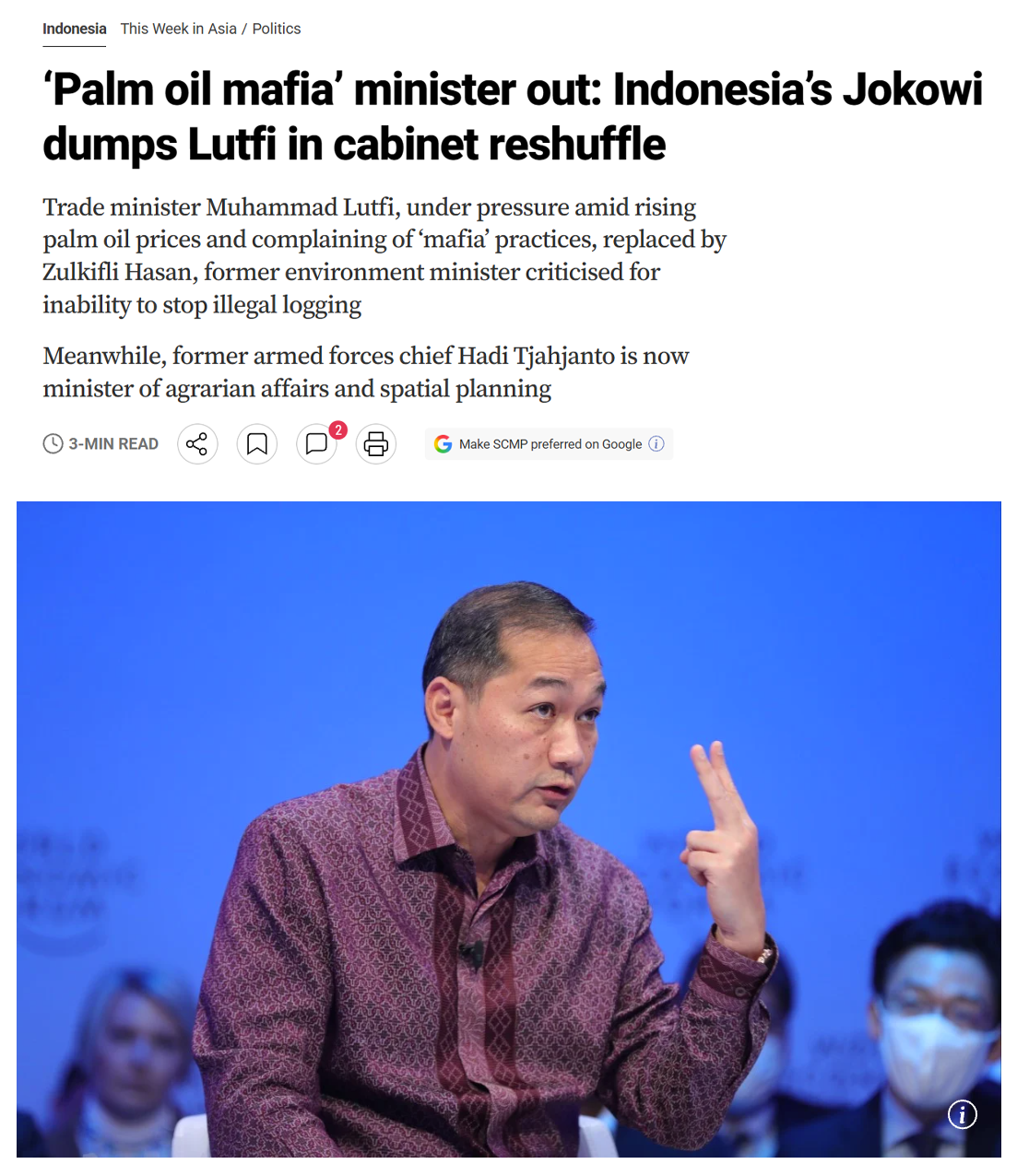
While Lutfi was only a witness in the case and wasn't charged with any wrongdoing, the fact that he failed to supervise his own ministry and dismantle what he called was "palm oil mafia" – despite repeated claims he would name names – shows that he couldn't handle even his small pond.
Today, 4 years later, he comes out to tell Singapore how to chase corrupt businessmen from his own country, even as Indonesia's rampant bribery is, yet again, the main reason for the environmental disaster, which has enveloped the region.
Let's be clear - Indonesia is burning because it's a corrupt shithole, full of dishonest people, who are incapable of civilised coexistence with their neighbours and the environment.
It's not a country where honesty is valued or practiced. It's a country where you rob, steal, pillage and burn to get ahead – and then pay off who you need to pay off to keep their mouths shut.
In corruption perceptions index by Transparency it ranks 109th in the world – Singapore ranks 3rd.
And yet here we have a failed Indonesian official, who got booted for failing to stop corruption in his own ranks, lecturing one of the cleanest countries in the world?
All of that while his compatriots are setting fires to rainforests – and the authorities are doing little to prosecute them.
If people like him rise to ministerial positions in Jakarta then it's small wonder the country looks the way it does.


