


Singapore's Prime Minister's comments on the recent spat between China and Japan over Taiwan have generated lots of angry responses from Chinese netizens, though it's likely that the Communist Party had a hand in it, deploying its internet brigades to rebuff Lawrence Wong instead of making official statements, which would turn it into a direct diplomatic clash.
It's easy to imagine that Beijing is not happy about PM Wong's frank assessment in which he stated that, like in the relations between Japan and Southeast Asia, he hoped that both countries can "put the history aside" and that:
"...survey after survey shows that Japan is the number one trusted great power in Southeast Asia. And so Singapore and all the Southeast Asian countries support Japan playing a bigger role in our region, including on the security front, because we think that provides for some stability..."
That part in particular must have stung badly as it not only emphasised Japan's role in a region that China sees as its own neighbourhood, seeking to subdue and vassalize it, but came from a Chinese Prime Minister of the only other Chinese-majority country in the world.
But the worst thing of all is that it was all... true.
Lawrence Wong didn't say anything really controversial or false. His comments are not some sort of propaganda nor are they an attempt to take Japan's side.
He merely observed that despite being brutally affected by the Japanese occupation during World War 2, Southeast Asian countries have moved on, since postwar Japan is a fundamentally different, democratic and thoroughly trustworthy country.
So trustworthy, in fact, that the region sees it as a strategic partner.
This sort of simple honesty is, of course, unacceptable to the totalitarian regime in Beijing, whose existence is founded on a mountain of lies about every imaginable thing.
Communist China seeks to portray itself as a peaceful, civilised power while committing daylight robbery on its neighbours in the South and East China Seas, claiming thousands of miles of territories that are rightfully theirs.
The administration routinely lies about the state of national economy, its growth, unemployment, or even the size of its population. It lied to the world about Covid-19, which ended up killing between 7 to as many as 30 million people around the world.
It even lies to itself and to its people – a lie to which it erected a monument to in the heart of its capital by placing the portrait of Mao Zedong over the gate to the Forbidden City.
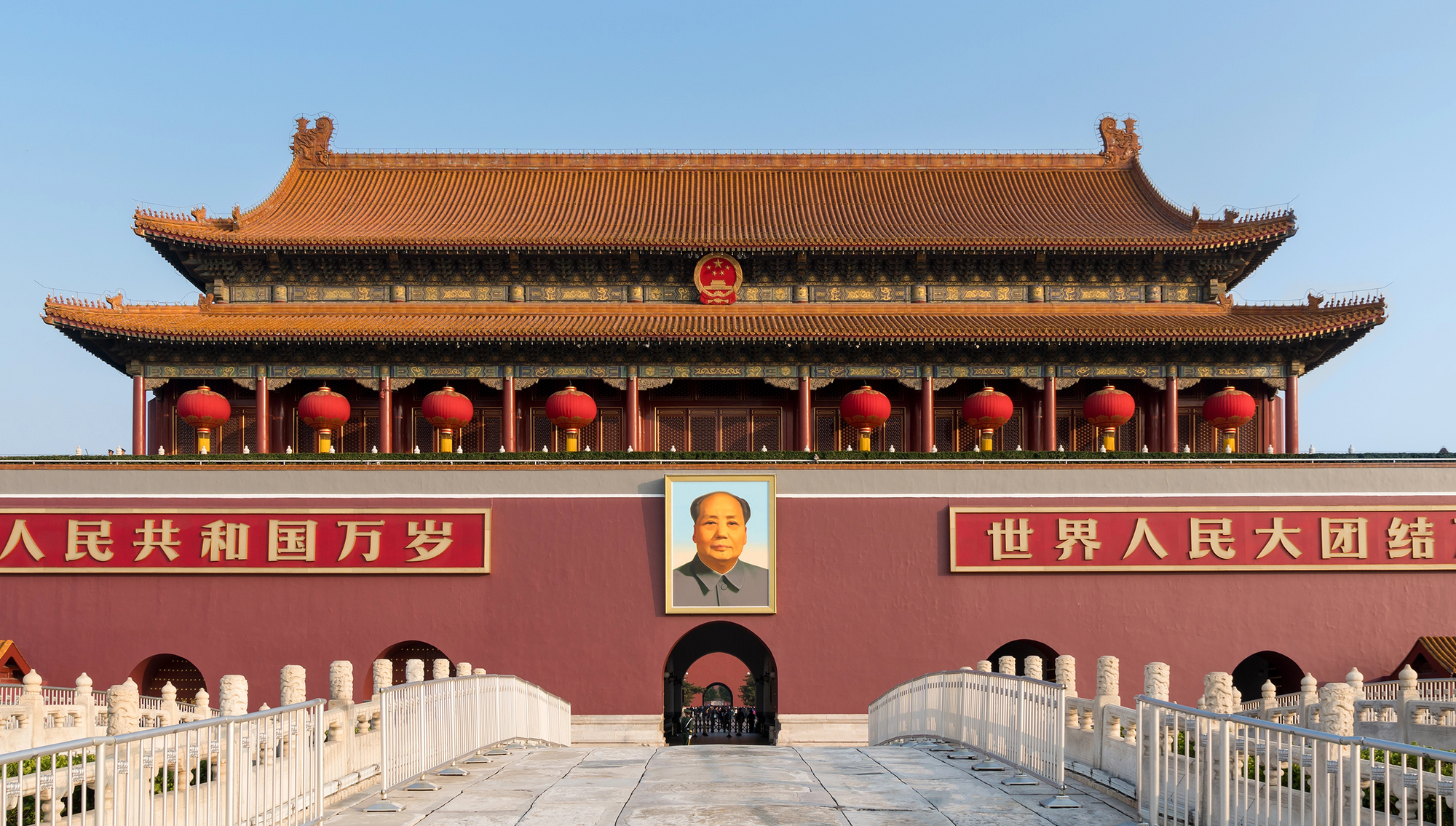
Instead of disavowing the brutal, deranged butcher, who stained his hands with blood of tens of millions of regular Chinese people (ironically, many more than died under Japanese boots), the ruling party continues the farcical displays of reverence, because admitting the truth could undermine its very own legitimacy as the sole government of the nation.
To keep the lies in circulation it had to erect the Great Firewall, preventing the public from accessing anything that would threaten the official narratives, keeping it exposed only to the official version of both history and current events.
So, of course, when an ethnic Chinese, leading a Chinese-majority country in Asia, says that Japan – which supports Taiwan's self-governance – is friendly, trustworthy and necessary for peace and stability it sets off alarm bells in Beijing.
While PM Wong didn't say anything that would warrant a direct response, he had to be chastised in public somehow – hence the coordinated online campaign, which incentivised many ordinary Chinese people harbouring nationalistic sentiments (long nurtured by the CCP) to voice their protest against Singapore as well.
It could also be seen as a warning shot, that the communist leadership heard what was said and didn't like it, so Singapore should tread carefully on Japan and Taiwan.
It may be just the first of many tests awaiting Lawrence Wong as the global conflicts heat up and major powers use both carrot and the stick to get others to fall in line.
Given its location and demographic makeup, Singapore is bound to be one if their main targets.
Featured image: Singapore Prime Minister's Office


